 Bolshaw Primary School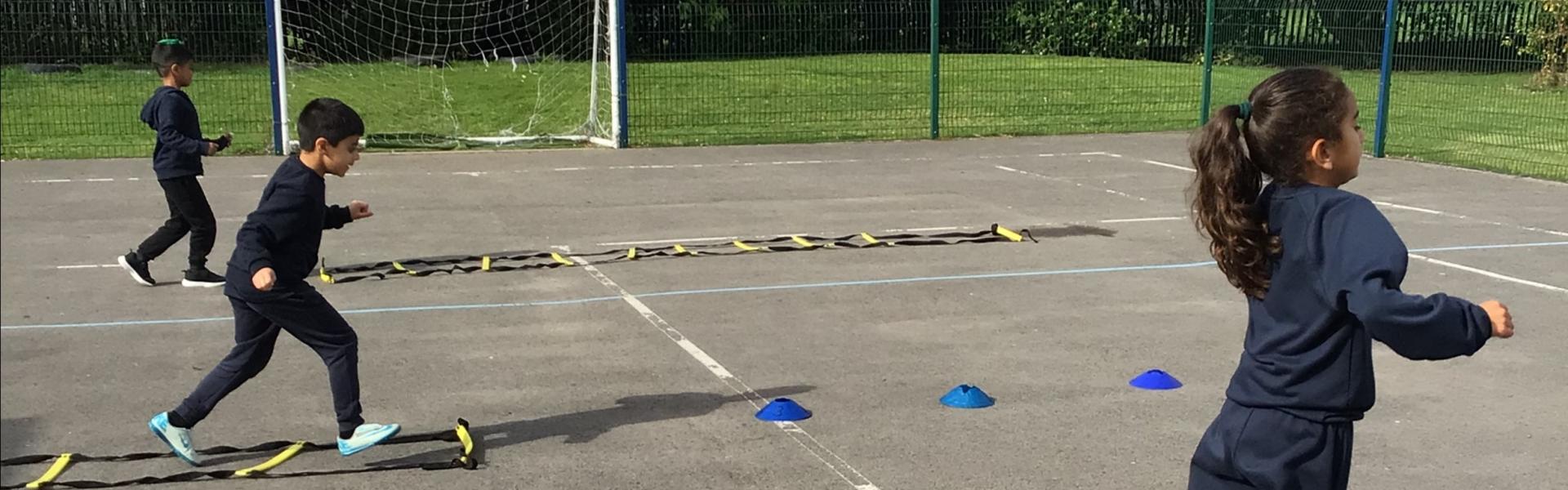
Year 1 2026 - 2027
Mrs Morgan
Mrs Shepherd
Hello and welcome to Year 1.
Your child has now entered an important stage of their primary school experience as they enter their first year of KS1.
In Year 1 we strive to make all children feel confident, independent and safe.
Autumn Term
This term, we will embark on an engaging exploration of Naughty Bus, delving into its rich language and intricate sequence of events to prepare for our independent writing assignments. To further enhance our understanding of both Naughty Bus and the vibrant city of London, we will also read The Last Stop on Market Street. While the primary focus of our literacy activities will be on Naughty Bus, we will draw connections between the texts to deepen our overall comprehension. This promises to be a term filled with discovery, creativity, and meaningful storytelling.
In Maths, we will be looking at Place Value within 10; addition and subtraction; grouping and geometry.
In Year 1 Science, we will explore the fascinating topic of the human body. Students will learn to identify and name various body parts while engaging in hands-on activities that stimulate our senses. This interactive approach will allow us to discover how our bodies function and how we experience the world around us.
Our foundation subjects for this term will look at human and physical geography, design and technology, computing and music.
As always, it is important to keep our bodies just as active as our minds and so for PE we will be focusing on developing our basic skills; sending and receiving; dance and gymnastics.
Spring term
Spring 1: The children are becoming "Story Detectives," using clues from illustrations to predict what happens next and using story maps to retell the adventure. We are focusing on building strong, simple sentences by consistently using capital letters, finger spaces, and full stops. Beyond storytelling, the children will explore different purposes for writing, including composing letters from the penguin, writing postcards about the journey, and even creating their own non-chronological reports about real-life penguins.
Spring 2: Our literacy lessons will be centred around the book Somebody Swallowed Stanley, which we linked closely to our science topic on materials and caring for our planet. Inspired by the story, we will explore the impact of sea pollution and use our knowledge of animals to write detailed fact files about ocean creatures and the threats they face. We will also be thinking about how we could make a difference by focusing on the ‘reduce, reuse, recycle’ model.
Spring 1: We are building a deep understanding of numbers up to 20, learning how "teen" numbers are made of ten and some more. The children will use number lines to locate and order numbers, as well as develop their calculation skills by "counting on" for addition and "counting back" for subtraction.
Spring 2: We will develop our understanding of place value up to 50, practised number bonds to 20, and explored capacity, volume, and measurement through practical activities.
In Science, we are becoming animal experts! We are learning to identify and name different groups of animals, including mammals, birds, fish, amphibians, and reptiles. The children will participate in games like "Beak Matching" and create "Fact Files" to compare how these animals are the same or different. In the second half of the term, we link this to our work on the environment, setting personal targets such as using reusable shopping bags and turning off taps while brushing our teeth.
Summer Term
Our first book of the term is The Very Hungry Caterpillar, which will help us secure our understanding of the days of the week and practise the correct spelling of each day. We will follow the caterpillar’s journey through a week, documenting the different foods he eats each day. Along the way, we’ll add our own imaginative adjectives to describe these foods, enhancing both our writing and vocabulary.
In addition to The Very Hungry Caterpillar, we will dive into Eddie’s Garden to explore how things grow. This book ties into our cross-curricular learning in Forest School and Science, where we will be investigating plants, flowers, and trees. We will also be heading out on a trip to put our plant knowledge to the test in a real-world setting. During these sessions, we’ll learn about the essential factors that help plants grow and discover the different types of plants we can find in our local environment.
In Maths, we are starting an exciting new unit on multiplication and division, as well as exploring fractions and time. These important topics will build our number skills and help us understand how to solve problems involving sharing, grouping, and measuring time.
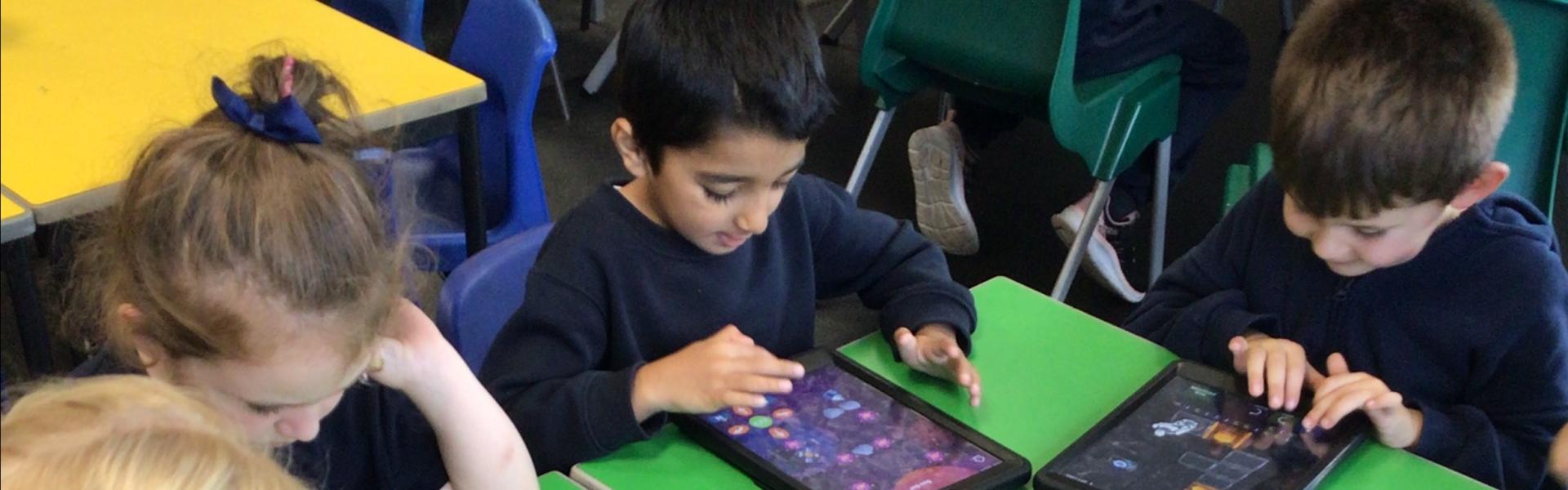
Our Computing lessons will continue with our second unit on programming. We will explore Scratch Jr and learn how to create our own interactive stories and games, understanding the basics of algorithms and how to use them to control the movement and actions in our programs.